ATS Resume Optimization: How to Beat the Bots
Introduction:
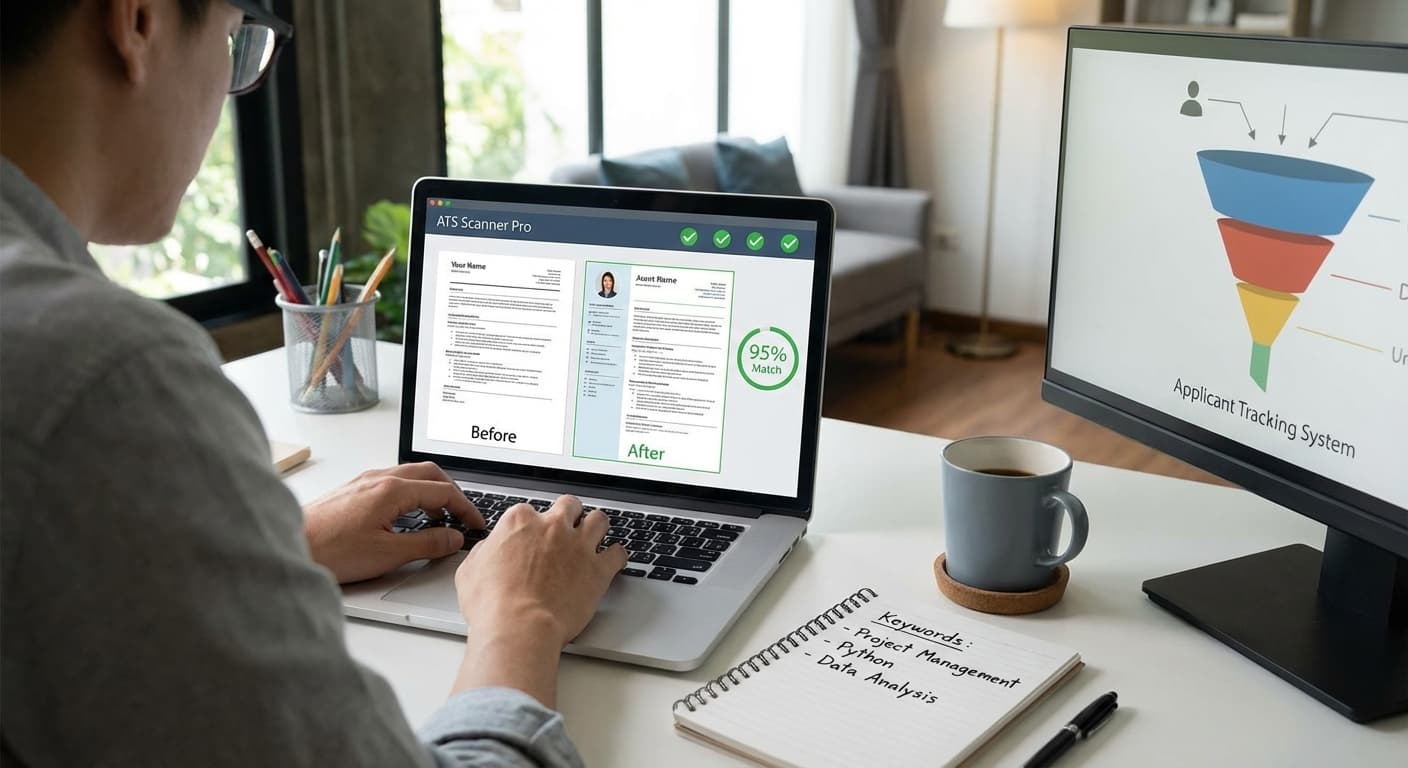
If your resume is not optimized for Applicant Tracking Systems (ATS), it might never reach a human recruiter. But with the right strategy, you can beat the bots and land interviews.
Key ATS Optimization Tips
- Use Job-Specific Keywords: Mirror the language in the job description.
- Proper Formatting: Avoid tables, images, or unusual fonts.
- Highlight Achievements: Use measurable outcomes to show impact.
- Sectioning: Keep headings clear: Skills, Experience, Education.
- Avoid Abbreviations: Spell out terms to ensure AI understands them.
How do you optimize a resume for ATS?
You optimize a resume for ATS in three steps: make the file easy to parse, use the same words the job posting uses for the skills you really have, and show evidence for each skill in your experience section. Formatting gets you read. Matching words get you ranked. Evidence gets you past the recruiter who reads it next.
Most advice stops at the first step. The second and third steps are where most resumes lose.
What an ATS actually does with your file
An applicant tracking system does not read your resume the way a person does. It does four things.
- It parses the file into text and tries to split it into fields: name, contact details, job titles, dates, skills and education.
- It compares that text with the requirements the recruiter set for the role.
- It applies any knockout questions, such as work authorisation or a minimum number of years.
- It ranks or filters the applicants, so the recruiter sees some resumes first and some never.
A resume can fail at any of these steps. A two column layout can break step one. A missing skill word can lose you step two, even when you have the skill. For a longer look at how this works in 2026, read how ATS systems see you.
Five checks you can run before you apply
- Save the resume as a PDF, open it, select all the text and paste it into a plain text editor. If the order is jumbled or text is missing, the ATS sees the same mess.
- Check that each job has a title, a company and dates on their own lines.
- Remove text that sits inside images, icons or text boxes. The parser often skips it.
- Use standard section headings: Experience, Skills, Education, Certifications.
- Write the full term and the short form once, for example "Search Engine Optimisation (SEO)", so both versions match.
The full method, with the three tests in the order that matters, is in how to check if your resume is ATS friendly.
Keywords: mirror the posting, do not stuff it
Take one posting and list every skill it names. Then find where your resume shows each one. Where you have the skill but use different words, change your words to match theirs. Where you do not have the skill, do not add it. A recruiter will ask about it in the interview.
A simple example. The posting asks for "stakeholder management". The resume says "worked with other teams". Rewrite it as "Managed stakeholders across sales, finance and operations to agree a single launch date." The skill is the same. Now the system can see it, and so can the recruiter.
Keyword stuffing, such as a hidden block of skills in white text, does not help. Modern systems and the recruiters behind them treat it as a warning sign.
Why a high ATS score is not the same as being ready
An ATS score tells you how well the text of your resume matches a role. It does not tell you whether you can do the job, or whether the gap is in the wording or in the skill itself. That difference matters. A wording gap takes ten minutes to fix. A skill gap takes a learning plan.
Read what a good ATS score actually means and why resumes get rejected by ATS, and how to tell before you chase a number.
SkillDrift Advantage
- AI-powered analysis ensures keywords match job requirements.
- Resume suggestions aligned to your career roadmap.
- Instant checks for formatting, experience hierarchy, and ATS compliance.
Use SkillDrift Job Match & Prep to craft an ATS-ready resume and practice tailored mock interviews. Get instant insights and maximize your chances.
Accounting postings name specific standards and tools, and the accountant skills page lists the ones most postings ask for, from IFRS and GAAP to reconciliations and Excel.
Where to start this week
Keyword tricks get you read. Skills get you hired.
- Upload your resume at app.skilldrift.ai and see your gaps against the role you actually want.
- Take the highest impact gap and start the roadmap for it.
- Run one mock interview for that target role and read the report honestly.
Prefer to do it on your phone? SkillDrift is on Google Play and the Apple App Store.
Before you rewrite anything, check where you stand. The ATS score checker shows which skills a role asks for that your resume does not show yet.
Optimise the resume, then close the gap behind it. The second one is what lands the offer.